Showing posts with label Cars. Show all posts

Monday, 28 September 2015

RENAULT KWID


September 28, 2015 : Renault has launched the Kwid at Rs 2.56 lac ex-showroom Delhi. The Kwid was amongst the most awaited launches of 2015 due to many factors like its SUV like styling, competitive price and a mileage of 25.17 Kmpl. The car is Renault’s hope to capture the entry-level segment and increase its foothold in the country. The Renault Kwid bookings started much before the Kwid launch date and has received overwhelming response. Rivaling the Alto 800 is no easy task, but Renault seems to be well prepared with the segment’s first touchscreen infotainment system, a sporty all-digital instrument cluster and a wide range of add-on of accessories. The car features a 800cc engine that is capable of producing 54bhp and 74Nm of torque. It comes with many segment firsts that impose revolutionizing implications for the small car industry.


DIGITAL DISPLAY
  
INTERIOR


Disclaimer: All images, designs or videos in this page are copyright of their respective owners. We don’t own have these images/designs/videos. We collect them from search engine and other sources to be used as information for you. No copyright infringement is intended. If you have reason to believe that one of our content is violating your copyrights, please do not take any legal action as we are trying to spread the information.

Friday, 25 September 2015

DC Avanti


Three-and-a-half-years after it was unveiled at the 2012 Auto Expo in Delhi, Avanti, touted as the first 'Made in India' sports car, has been launched at a starting price of Rs 35.93 lakh (ex-showroom, Pune).

The two-seater sports car from Pune-based DC Design measures 4565mm in length, 2120 in width and has an overall height of 1200mm. The Avanti weighs 1580kg and comes with 155mm of ground clearance which way more than usual sports car. Considering Indian road conditions, the increased ground clearance will help Avanti to run on any terrain without scraping the under body.
The sports car is powered by Renault sourced 2.0-litre, four cylinder, turbo petrol engine that develops 250bhp at 5500rpm and 340Nm of torque at 2750-5000rpm. The engine is mated to six speed manual transmission. The sports car runs 0-100kmph in 6 seconds and has a top speed of electronically-limited 200kmph.

"We are proud of the fact that it is indigenously designed and developed in India for Indian customers and for Indian roads. It's now a car that the young can aspire. Usually when you're young, you can't afford a sports car. But with this, we are trying to reach out to the young aspirants to be able to afford a sports car because in other countries the sports car is a huge segment by itself," said Dilip Chhabria, founder and head of DC Design during the launch in Pune on Thursday.
The rear engine, rear wheel drive Avanti runs on 20-inch wheels and all the four wheels have disc brakes. Additionally, the vehicle has ABS and Electronic Brake Distribution for safety.
The sports car is available in standard red, white and silver shades with four upholstery shades - grey, tan, black and red. The Avanti is sold at DC Design dealerships in Ahmedabad, Bengaluru, Chennai, Gurgaon, Hyderabad, Kolakata, Lucknow, Mumbai, Pune, Raipur and Surat.


Disclaimer: All images, designs or videos in this page are copyright of their respective owners. We don’t own have these images/designs/videos. We collect them from search engine and other sources to be used as information for you. No copyright infringement is intended. If you have reason to believe that one of our content is violating your copyrights, please do not take any legal action as we are trying to spread the information.

Friday, 11 September 2015

Skoda Octavia anniversary edition


Skoda has introduced an anniversary edition variant of its Octavia. The Style Plus gets the addition of a rear-side curtain airbags – a total of 8 airbags, push-start button, keyless entry and exit, a reversing camera with centre console display, a SmartLink infotainment system and paddle shifters on the 7-speed DSG gearbox. The exteriors remain visibly identical to the standard Octavia variants.

The Style Plus variant is available on the 1.8-litre TSI petrol and the 2.0-litre TDI diesel engines; the smaller 1.4-litre TSI petrol engine misses out on the variant upgrade and comes equipped with the automatic transmission only. The powertrains remain technically unchanged.

The Octavia 1.8 TSI petrol Style Plus retails at Rs 22.84 lakh, while the 2.0l TDI diesel Style Plus is priced at Rs 26.02 lakh (All prices on road, Mumbai).


Disclaimer: All images, designs or videos in this page are copyright of their respective owners. We don’t own have these images/designs/videos. We collect them from search engine and other sources to be used as information for you. No copyright infringement is intended. If you have reason to believe that one of our content is violating your copyrights, please do not take any legal action as we are trying to spread the information.

Wednesday, 9 September 2015

CNG: Advantages And Disadvantages

Compressed Natural Gas (CNG) is a fuel that needs no introduction. It is a cheap fuel to make and use, which is why it is so widespread in public transport. Not to mention the fact that the second hand car market is greatly supported by CNG kits. Vehicles like the Honda Civic, Accord and Toyota Corolla are favorites to be bought second hand for the same price as a hatch-back and then have green fuel kits used to make them easy on the pocket. With diesel deregulation soon to kick in, the prices of the oil will head north soon, so CNG seems like a good investment for those with regular usage. Here’s a brief look at the advantages and disadvantages of CNG:

Advantages:

  • The most obvious advantage of them all is the cost. Rickshaws, taxis and buses use CNG as it is a very cheap fuel and facilitates high running with lower costs. On an average CNG costs around half or 1/3rd the amount regular fuel. In fact, in a brief survey, a hatch-back like the Hyundai i10 running on CNG and an entry level sports bike like the Honda CBR250R have similar fuel costs for an average running of around 50 kms a day.
  • It is a greener fuel. The emissions and hydrocarbons that are released as a by product of CNG usage are lesser than those created by regular fuel. Carbon monoxide emissions are down by 70-85% while hydrocarbon levels are reduced by 40-60%.
  • The price fluctuation of natural gas is less. Look back over the past few years and you’ll notice that petrol and diesel prices have been on a roller coaster ride, but CNG has a relatively linear movement. This is mainly because of domestic production which has no dependency on international movements.
  • Engine life improves. Contrary to popular belief, CNG is actually a better fuel for improving engine life as the carbon levels are greatly reduced.

Disadvantages:

  • The performance of the car is reduced significantly. On an average CNG users experience a crash of about 10% in performance. Acceleration is slower so you may have to rev the engine more to get going. Essentially this is the reason why people believe CNG reduces engine life. The issue is, drivers expect petrol like performance from CNG and rev more to get it. This eventually results in more wear and tear.
  • The storage space is eaten up badly. CNG tanks are easily the size of a large bag, so boot space is reduced or removed entirely as the fuel storage tank takes up all the room.
  • Availability is not as widespread as regular gas stations. Within the city users probably have a list of stations that fall in their route, but beyond that it is an uncertainty. This is the reason why cars aren’t made to run exclusively on CNG.
  • Blocked injectors. Cars with CNG kits should always be started on petrol and run for a few kilometers before being switched to the green fuel. This warms up the engine better and gets the motor well lubricated. Petrol is expensive so drivers often chose not to use it. This causes the injectors to crust and get blocked. Not to mention the fuel laying in the tank ages and unlike wine, does not get any better.
  • Fuel range. Although CNG is a cheaper fuel, the actual range on just CNG is lesser than petrol. Not to mention, running on a close to empty tank reduces the pressure and increases the risk of the valves bursting. So, even if the car does use CNG, it is always wise to keep a regular flow of petrol both in the tank and in the engine usage.
  • It is important to note that CNG kits cost around Rs 30,000 to install. So, if you do plan on having a kit put in, be sure that you actually need it and have a high average running.

Tuesday, 8 September 2015

All new upcoming SUV's

2016 Toyota Fortuner


Toyota revealed the new Fortuner in Australia with a launch date set for the end of October. However, the SUV will arrive in India next year - at the 2016 Delhi Auto Expo. Toyota will now offer the Fortuner in Australia with its new 2.8-litre direct-injection 4-cylinder turbo-diesel unit.
As far as transmission options on the new Toyota Fortuner are concerned, it will get a choice of a new 6-speed manual along with a 6-speed automatic transmission. The manual gearbox features 'intelligent' technology that promises smoother shifting by matching engine speed to transmission speed. The SUV also sports a part-time 4x4 system that can be accessed via a dial.

To be offered in 3 grades, namely, GX, GXL and Crusade, which will come fitted with trailer sway control, front and rear air-conditioning, large touchscreen audio displays, Toyota Link connected mobility, side steps, 17 or 18-inch wheels, disc brakes front and rear, and an air-conditioned compartment that helps keep drinks and food warm or cold.

2016 Ford Endeavour


New 2016 Ford Endeavour is expected on the market by the end of 2015. It is based on the concept of Everest, with some elements from other Ford models. It is primarily intended for the Indian market, but it is possible to export to other markets.This car will be driven to the front wheels or all four wheels. It will be made with two diesel engines:
2.5-liter four-cylinder Duratorq TDCi engine of 143 hp and 243 lb-ft (330 Nm) of torque. Consumption will be 18/24 mpg. This motor is drive through the front wheels, combined with a 5-speed manual transmission.
3.0-liter four-cylinder Duratorq TDCi engine of 156 hp and 280 lb-ft (380 Nm). The engine is combined with a 5-speed automatic transmission. Consumption will be at 21/29 mpg.
Both engines with direct fuel injection.2016 Ford Endeavour will be made at Ford T6 platform with five doors. Weight will be from 4142 to 4440 lbs (1879 to 2014 of kg). This model will be placed on 16-inch alloy wheels, with a wheelbase of 112.5 inch (2860 mm). Dimensions: length 199.3 inch (5062 mm), width 70.4 inch (1788 mm) and height 71.9 inch (1826 mm). Used when making aluminum, carbon fiber and high-resistance steels. Built a massive chrome trapezoidal grille, with two horizontal chrome plate. Noticeable is the company logo in the middle of the grid. Set a new flatter bonnet engine. Front and rear bumpers have been redesigned. Front lighting is the new sweptback headlights. Fog lights are integrated into the front bumper. Around the side windows were installed chrome frames. A new rear roof spoiler.


2016 Mitsubishi Pajero


The 2016 Mitsubishi Pajero Sport/2016 Mitsubishi Montero Sport/2016 Mitsubishi Challenger is the second model to feature Mitsubishi’s “Dynamic Shield” front end, and doesn’t look like a Mitsubishi Triton with an SUV body style. It gets generous helping of chrome in the front fascia, sleek headlamps and LED daytime running lights, and a new bumper design. At the back, it features a striking pair of vertically-oriented taillight clusters (similar to the GR-HEV concept) and a re-designed lift gate.
The interior of the 2016 Mitsubishi Pajero Sport borrows cues from the model it’s based on, the Mitsubishi Triton. However, it does features distinctive elements such as a new 4-spoke multifunction steering wheel, a flowing center console with sculpted silver embellishments on either side, silver door handles, and leather upholstery.
Powering the 2016 Mitsubishi Sport is a 2.4L MIVEC turbo diesel engine which comes paired to an 8-speed automatic transmission (first for a Mitsubishi model). Although power figures have not been revealed yet, reports suggest that it will deliver 181 PS and 430 Nm. Power is sent to all four wheels via a Super-Select 4WD-II four-wheel drive system with a new Off-road Mode and by Hill Descent Control (both firsts in a Mitsubishi).


2016 Hyundai Santa Fe


Hyundai's Santa Fe has been unveiled in its home market of South Korea this week, offering a first official look at the refreshed SUV.Styling updates are limited to a revised grille garnish and a new front bumper, while the rear gains a more premium LED lighting design, a subtly revised bumper and resculpted exhaust tips.
A significant update has occurred under the skin, however, with new High Strength Steel components now used in the chassis and body shell. This is likely a play to improve on the Santa Fe’s ‘marginal’ rating in the American IIHS overlap crash test.Key technology updates include a new autonomous emergency braking system, along with blind-spot monitoring, surround-view camera, adaptive cruise control and dynamic headlights that turn into corners.There’s also a new high- and low-pressure airbag deployment control system, which determines the necessary force for airbag release depending on the severity of a collision.
The engine line-up is expected to remain the same. The base option will be 3.3 liter V6 with 290 hp and 252 lb-ft of torque. The 2016 Santa Fe will be also available with 2.4 liter inline-four with 190 horses and 181 lb-ft of max torque. The last option will be a turbocharged 2.0 liter Theta II I-4 engine, which output 264 horsepower and 259 lb-ft of twist. All variants could be paired with either 6-speed manual or 6-speed automatic transmission.


Disclaimer: All images, designs or videos in this page are copyright of their respective owners. We don’t own have these images/designs/videos. We collect them from search engine and other sources to be used as information for you. No copyright infringement is intended. If you have reason to believe that one of our content is violating your copyrights, please do not take any legal action as we are trying to spread the information.

Sunday, 6 September 2015

Upcoming Suzuki Baleno hatchback


Suzuki has released the first official images of the Baleno hatchback. This new hatchback is set to slot in above the Swift in Suzuki’s line-up in India and internationally.
The Baleno’s overall styling is similar to the iK-2 concept unveiled at the Geneva motor show this March. At the front, the grille and headlamps are similar to those seen on the concept, although the headlamp units get different internal detailing on the production model. The front bumper has been redesigned with a narrower, less-aggressive air dam and fog lamps placed on either edge. On the flanks, the wing mirrors are also more in line with the production model, while the wheels are different from the concept.
There are no details about the dimensions yet, but expect it to be similar to the concept. Details of the interiors are also unknown, but it is likely that the Indian version will come equipped with Maruti’s SmartPlay infotainment system.
Powering the new Suzuki is a new 1.0-litre Boosterjet direct injection turbocharged unit, expected to be launched in the Indian car as well. The Indian version could also be powered by the 1.2-litre K-series petrol and 1.3-litre DDiS diesel motors.
The Suzuki Baleno is expected to launch internationally early next year.

Thursday, 3 September 2015

History of Internal Combustion Engines


History of the Internal Combustion Engine - The Heart of the Automobile
An internal combustion engine is any engine that uses the explosive combustion of fuel to push a piston within a cylinder - the piston's movement turns a crankshaft that then turns the car wheels via a chain or a drive shaft. The different types of fuel commonly used for car combustion engines are gasoline (or petrol), diesel, and kerosene.

A brief outline of the history of the internal combustion engine includes the following highlights:
1680 - Dutch physicist, Christian Huygens designed (but never built) an internal combustion engine that was to be fueled with gunpowder.
1807 - Francois Isaac de Rivaz of Switzerland invented an internal combustion engine that used a mixture of hydrogen and oxygen for fuel. Rivaz designed a car for his engine - the first internal combustion powered automobile. However, his was a very unsuccessful design.
1824 - English engineer, Samuel Brown adapted an old Newcomen steam engine to burn gas, and he used it to briefly power a vehicle up Shooter's Hill in London.
1858 - Belgian-born engineer, Jean JosephÉtienne Lenoir invented and patented (1860) a double-acting, electric spark-ignition internal combustion engine fueled by coal gas. In 1863, Lenoir attached an improved engine (using petroleum and a primitive carburetor) to a three-wheeled wagon that managed to complete an historic fifty-mile road trip. (See image at top)
1862 - Alphonse Beau de Rochas, a French civil engineer, patented but did not build a four-stroke engine (French patent #52,593, January 16, 1862).
1864 - Austrian engineer, Siegfried Marcus built a one-cylinder engine with a crude carburetor, and attached his engine to a cart for a rocky 500-foot drive. Several years later, Marcus designed a vehicle that briefly ran at 10 mph that a few historians have considered as the forerunner of the modern automobile by being the world's first gasoline-powered vehicle.
1873 - George Brayton, an American engineer, developed an unsuccessful two-stroke kerosene engine (it used two external pumping cylinders). However, it was considered the first safe and practical oil engine.
1866 - German engineers, Eugen Langen and Nikolaus August Otto improved on Lenoir's and de Rochas' designs and invented a more efficient gas engine.
1876 - Nikolaus August Otto invented and later patented a successful four-stroke engine, known as the "Otto cycle".
1876 - The first successful two-stroke engine was invented by Sir Dougald Clerk.
1883 - French engineer, Edouard Delamare-Debouteville, built a single-cylinder four-stroke engine that ran on stove gas. It is not certain if he did indeed build a car, however, Delamare-Debouteville's designs were very advanced for the time - ahead of both Daimler and Benz in some ways at least on paper.
1885 - Gottlieb Daimler invented what is often recognized as the prototype of the modern gas engine - with a vertical cylinder, and with gasoline injected through a carburetor (patented in 1887). Daimler first built a two-wheeled vehicle the "Reitwagen" (Riding Carriage) with this engine and a year later built the world's first four-wheeled motor vehicle.
1886 - On January 29, Karl Benz received the first patent (DRP No. 37435) for a gas-fueled car.
1889 - Daimler built an improved four-stroke engine with mushroom-shaped valves and two V-slant cylinders.
1890 - Wilhelm Maybach built the first four-cylinder, four-stroke engine.
Further Reading - The Mechanics of Internal Combustion Engines - What is a 2-stroke? 4-stroke?

Engine design and car design were integral activities, almost all of the engine designers mentioned above also designed cars, and a few went on to become major manufacturers of automobiles. All of these inventors and more made notable improvements in the evolution of the internal combustion vehicles.

The Importance of Nicolaus Otto
One of the most important landmarks in engine design comes from Nicolaus August Otto who in 1876 invented an effective gas motor engine. Otto built the first practical four-stroke internal combustion engine called the "Otto Cycle Engine," and as soon as he had completed his engine, he built it into a motorcycle. Otto's contributions were very historically significant, it was his four-stoke engine that was universally adopted for all liquid-fueled automobiles going forward.

The Importance of Karl Benz
In 1885, German mechanical engineer, Karl Benz designed and built the world's first practical automobile to be powered by an internal-combustion engine. On January 29, 1886, Benz received the first patent (DRP No. 37435) for a gas-fueled car. It was a three-wheeler; Benz built his first four-wheeled car in 1891. Benz & Cie., the company started by the inventor, became the world's largest manufacturer of automobiles by 1900. Benz was the first inventor to integrate an internal combustion engine with a chassis - designing both together.

The Importance of Gottlieb Daimler
In 1885, Gottlieb Daimler (together with his design partner Wilhelm Maybach) took Otto's internal combustion engine a step further and patented what is generally recognized as the prototype of the modern gas engine. Daimler's connection to Otto was a direct one; Daimler worked as technical director of Deutz Gasmotorenfabrik, which Nikolaus Otto co-owned in 1872. There is some controversy as to who built the first motorcycle Otto or Daimler.

The 1885 Daimler-Maybach engine was small, lightweight, fast, used a gasoline-injected carburetor, and had a vertical cylinder. The size, speed, and efficiency of the engine allowed for a revolution in car design. On March 8, 1886, Daimler took a stagecoach and adapted it to hold his engine, thereby designing the world's first four-wheeled automobile. Daimler is considered the first inventor to have invented a practical internal-combustion engine.

In 1889, Daimler invented a V-slanted two cylinder, four-stroke engine with mushroom-shaped valves. Just like Otto's 1876 engine, Daimler's new engine set the basis for all car engines going forward. Also in 1889, Daimler and Maybach built their first automobile from the ground up, they did not adapt another purpose vehicle as they had always been done previously. The new Daimler automobile had a four-speed transmission and obtained speeds of 10 mph.

Daimler founded the Daimler Motoren-Gesellschaft in 1890 to manufacture his designs. Eleven years later, Wilhelm Maybach designed the Mercedes automobile.

Wednesday, 2 September 2015

Honda BR-V


Honda has officially revealed the BR-V at the on-going 2015 Gaikindo Indonesia International Auto Show (GIIAS). The price of the BR-V in Indonesia will range from 230-265 Million Indonesian Rupiah (IDR) nearly Rs. 10.80-12.40 lacs. The bookings are open in Indonesia with deliveries slated for early 2016. Though Honda has not confirmed its launch in India, but it is expected that the company will reveal it at the 2016 Indian Auto Expo in Feb with a subsequent launch. In terms of engine options, it will be powered by a 1.5-liter i-VTEC engine producing 120 PS @ 6600 rpm and 145 Nm of peak torque @ 4600 rpm, mated to a 6-speed manual gearbox along with a CVT automatic (Earth Dream Technology). However, for the Indian market they have to offer it with the 1.5-liter i-DTEC along with the 1.5-liter i-VTEC petrol.

Saturday, 29 August 2015

NEW MAHINDRA TUV300


Mahindra has till now only revealed the name and has released a few teaser images of the TUV300. Speaking on the announcement of the new SUV’s name, Pravin Shah, President & Chief Executive (Automotive), M&M Ltd. said,” The TUV300 is one of the most eagerly anticipated launches of this year. Signifying a true ‘Make-in-India’ product, the design of the TUV300 is inspired by a battle tank. We are confident that this product launch will create excitement in the market as well as amongst our customers.
Mahindra & Mahindra has also released a teaser image of the TUV300’s instrument panel ahead of its launch on September 10, 2015. The image reveals the three-spoke steering wheel of the compact SUV that features audio system controls and contoured palm grips. While, the instrument cluster sports a Multi-information display (MID) in the middle, a speedometer on right and a tachometer on the left. It gets two large dials with chrome highlights that add more to its sporty appeal.
Since the Mahindra TUV300 will be slightly more upmarket product than the Bolero, it will be more expensive. The TUV300 has been designed at Mahindra & Mahindra’s Kandivli-based Mumbai office with inputs from Pininfarina. Whereas the research & development of the SUV was carried out at Mahindra Research Valley (MRV) in Chennai
Design
The Mahindra TUV300’s design is claimed to be inspired by a battle tank. With raised shoulders, high front nose, flat roof, straight bonnet and high ground clearance, the Mahindra TUV 300 is expected to have an aggressive styling. Based on the new ladder frame chassis, the Mahindra TUV300 will be more compact and lighter than the Bolero. It’s the same platform that underpins the new Scorpio


                                                              TUV300 TEASER


Friday, 28 August 2015

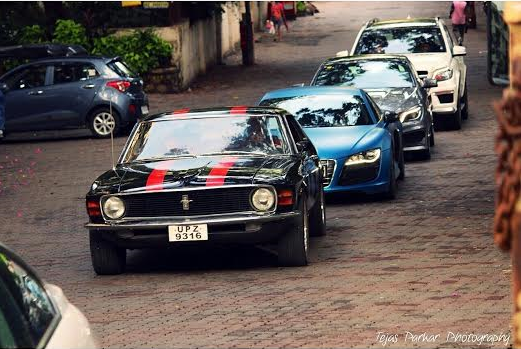
THROTTLE 97 - One of the best supercar family in Mumbai

                            
Throttle 97 one of the best SuperCar families in Mumbai.


Throttle 97 -The family of super car was started in March 2015 by some of the supercar fans from Mumbai.
Aman suggested Throttle & 97 was suggested by Daman so its called as
THROTTLE97.
The family of Throttle97 was started by few cars initially – B.M.W 650i , Audi R8 , Supra & Mercedes c63 and than few add on like m3 , Jaguar xkrs etc.
The family is still growing bigger .
Car owners drive especially on Sundays, Followed by two routes.

  •  Meetup at bandra n head to town using sealink and than cars r parked at starbucks at fort n followed by  photo shoot & heads to esternexpress freeway.


  •  Meetup at BKC & head to Palm Beach road after driving few kms head towards Kharghar


The family also has its own professional photographers .


  The first ride of THROTTLE97


A tribute to Mr Paul Walker by one of its fan 
belong to THROTTLE97


The mighty Germans


All lined up


THROTTLE97 is family with cool guys & Hot cars

Official instagram page #throttle97

Thursday, 27 August 2015

10 Fast & Fun-to-Drive Affordable Cars


Is it fast? Check. Is it fun to drive? Check. Is it affordable? Check. Want a fun car that can make you smile everyday but fits a tight budget of under 10 lakh rupees. You’ve got no less than 10 options in the Indian car market. A mixture of hatchbacks and sedans, this list encompasses everyday cars that will suit a wide range of budgets, from 4-10 lakh rupees.
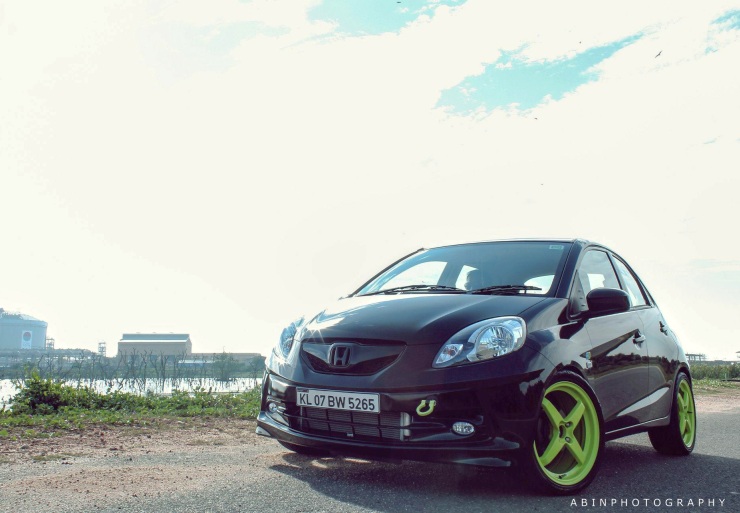
Honda Brio


The Honda Brio is the India’s least priced pocket rocket that is also composed at high speeds. Now, this obviously means that the Maruti Alto K10 has to be left out. The Brio, with its 1.2 liter i-VTEC petrol motor pushing out 87 Bhp-110 Nm, and 920 kilogram kerb weight, makes for rapid acceleration. While top speed is limited to 140 Kph, the way the Brio gets here is what will make you smile. With prices starting from under 4 lakh rupees, you can’t ask for more, can you.
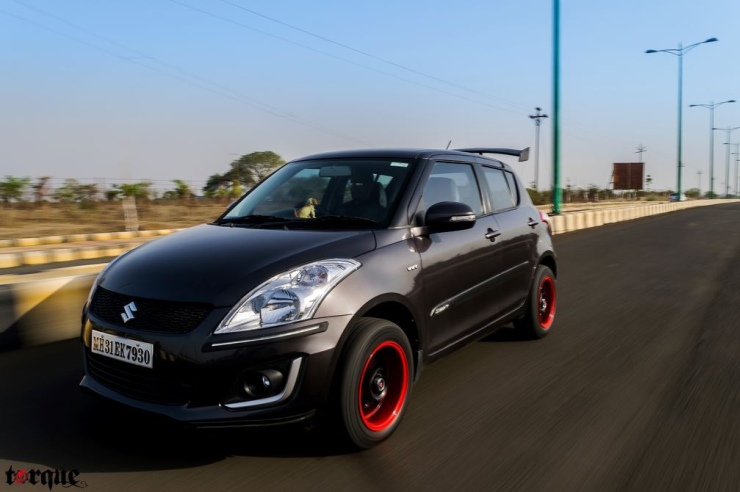
Maruti Swift Petrol


The Maruti Swift Petrol is one car that both you and your uncle can drive. Well, this hatchback’s an all-rowith under that has something for everyone, and this is precisely what makes the Swift so special. Throw in wider rubber, and the Swift Petrol will instantly become one of the most involving cars to drive in the sub-5 lakh rupee category. The car uses a 1.2 liter K-Series petrol engine with 86 Bhp and 112 Nm. The light 960 kilogram kerb weight, a slick 5 speed manual gearbox and a superb chassis balance are the willing weapons in thw Swift’s armoury.
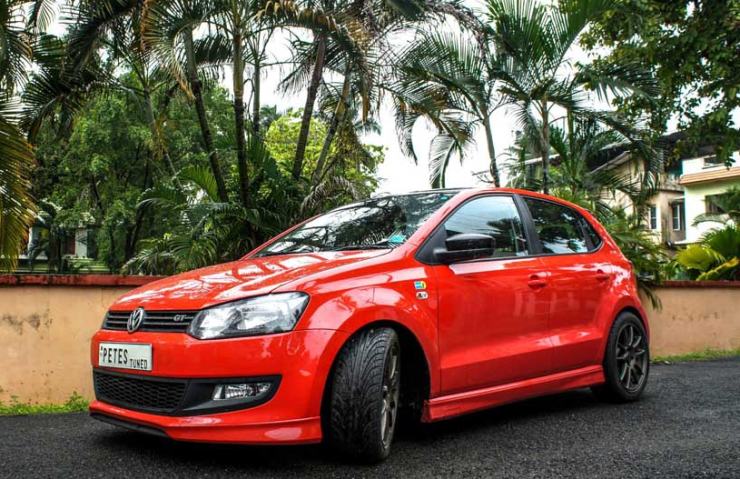
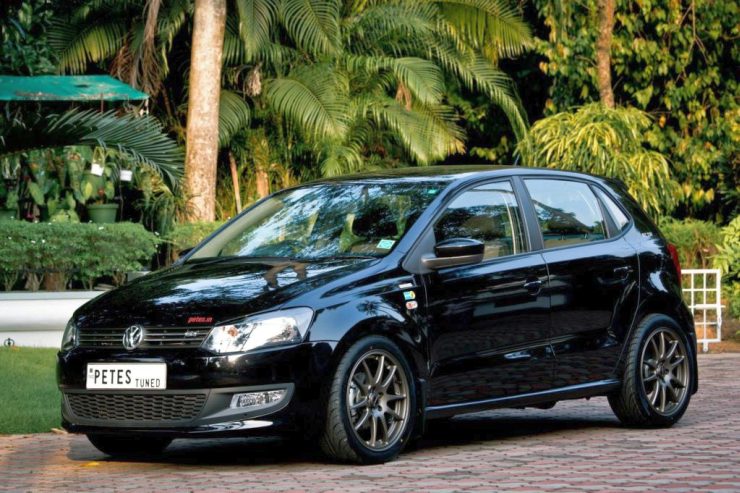
Volkswagen Polo GT TSI


The Volkswagen Polo GT TSI is one of the fastest hatchbacks in the sub-10 lakh rupee category, and the car even shows a clean pair of heels to most C-Segment sedans. The Polo GT TSI is powered by a 1.2 liter turbocharged petrol engine, which is the major reason behind the car’s blistering performance. A 7 speed twin clutch automatic gearbox, with its blinding shift speeds makes the Polo even more involving to drive. Want a very fast hatchback that is very convenient too? The Polo GT TSI is the one for you.
Volkswagen Polo GT TDI


The Polo GT TDI is essentially the turbo petrol powered Polo’s diesel sibling. The GT TDI uses a 1.5 liter TDI turbo diesel engine that puts out 103 Bhp-250 Nm. Torque is what matters in diesel land and 250 Nm of it means that the Polo GT TDI is the torque bomb among the budget hatchbacks sold in India. Unlike its petrol sibling, the car uses a 5 speed manual gearbox. With a 0-100 Kph run dispatched in under 11 seconds, the Polo GT TDI is a case of performance with good fuel efficiency.
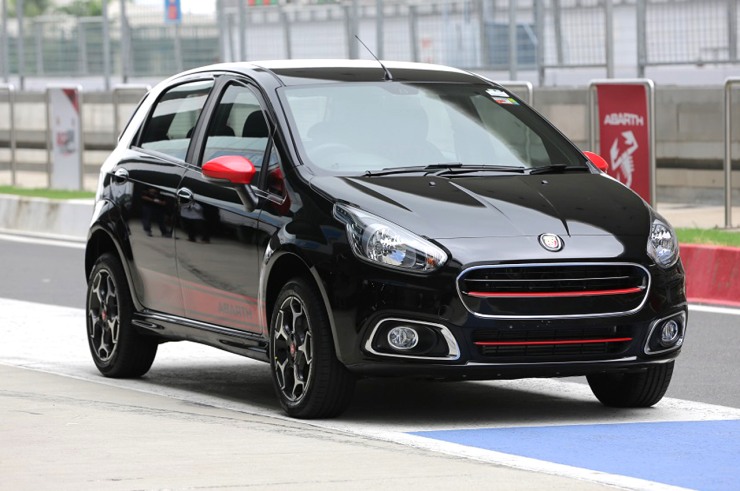
Fiat Punto Abarth


The Fiat Punto Abarth isn’t in Othe market yet, but will be available to hot hatchback enthusiasts in October this year. The reason why the Punto Abarth is in this list is easy to see, really. A 0-100 Kph timing of 9,58 seconds makes it faster than most C and D Segment sedans too. Couple this with a fast hydraulic steering, you have a car that is spades of fun both in the straight line and when the going gets very twisty. A solidly built car whose chief aim is to please the one with the happy right foot, the Punto Abarth will slot in under the 10 lakh rupee mark.
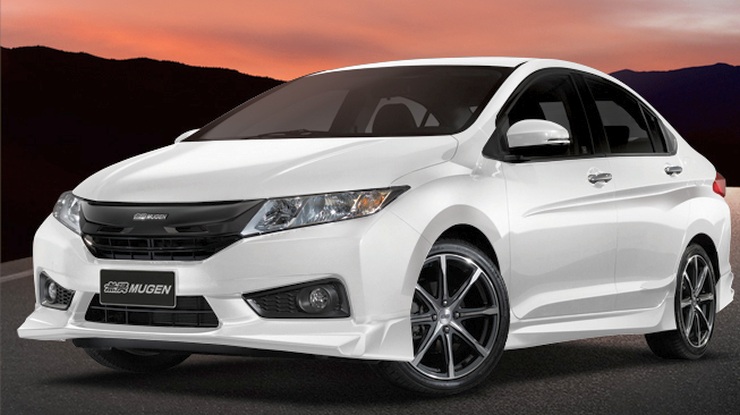
Honda City Petrol


The Honda City Petrol is a Jekyll and Hyde car. As long as you want it to serve as an everyday family car, it will, delivering reliability, comfort and low maintenance costs in good measure. When you’re in the mood for exercising your right foot at traffic light GPs, the City will deliver here too. The car is one of the quickest C-Segment sedans in the country, and the 1.5 liter i-VTEC petrol motor with 117 Bhp-145 Nm, is squarely responsible for this. The City Petrol is also quite affordable. You get the ABS and driver airbag equipped car for under 8 lakh rupees,
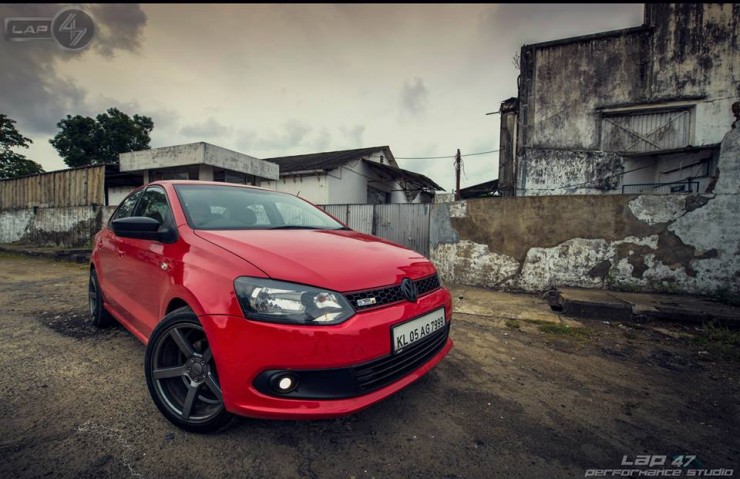
Volkswagen Vento TSI


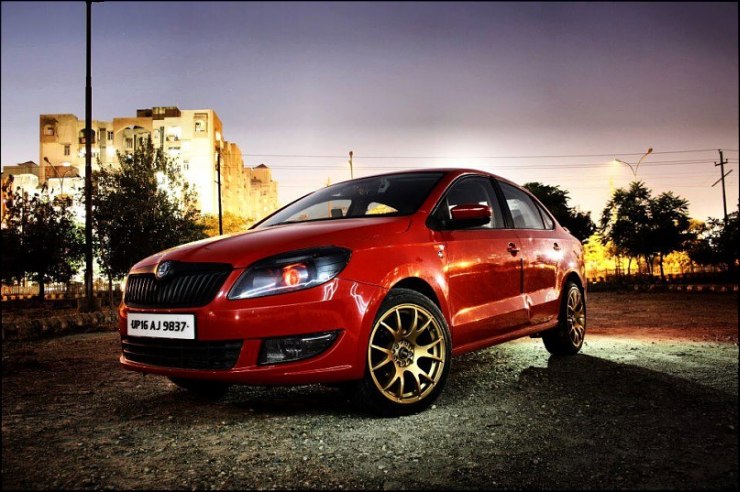
The Vento is the sedan version of the Polo, and shares some engines with the latter. One such engine is the 1.2 liter TSI turbo petrol unit, about which we’ve already elaborated. The Vento TSI also uses the same 7 speed, twin clutch automatic gearbox as the Polo, giving the sedan the same blistering acceleration and responsiveness. If you want a more spacious car with thrilling performance, buy the Vento TSI. It’s everything that the Polo GT TSI is, in a larger, more comfortable package.
Volkswagen Vento Diesel DSG


The Volkswagen Vento Diesel is the Polo GT TDI in sedan form. Since the car’s heavier, it’s slightly slower than the Polo GT TDI. A balanced chassis and a taut suspension set up means that the Vento Diesel is fun to drive. The TDI turbo diesel engine’s copious torque gives the car enough poke across the rev band. While a 5 speed manual gearbox is standard, the party trick on the Vento Diesel is the 7 speed twin clutch DSG automatic gearbox. This gearbox makes the Vento Diesel more sportier than the Polo GT TDI.
Fiat Linea T-Jet


The Fiat Linea T-Jet is affordable turbo petrol power. Fiats are traditionally good handlers. The Linea goes a step ahead with a nice ride. The 1.4 liter T-Jet turbo petrol engine gives it enough poke to make for some really high speeds. The responsive hydraulic power steering that has loads of feel and the sublime chassis balance makes the Linea a top pick for petrol car enthusiasts on a budget. ABS is standard, and prices start at 8.08 lakh rupees.
Skoda Rapid Diesel


The Skoda Rapid Diesel is essentially a cheaper variant of the Volkswagen Vento Diesel, with a lower price tag to boot. It rides better too. The car is available with both 5 speed manual and 7 speed twin clutch automatic transmissions. If you like to drive, dig the Rapid’s styling and ride quality, and want to save some money, the diesel powered variant is the one to opt for. Prices start from 8.81 lakh rupees.